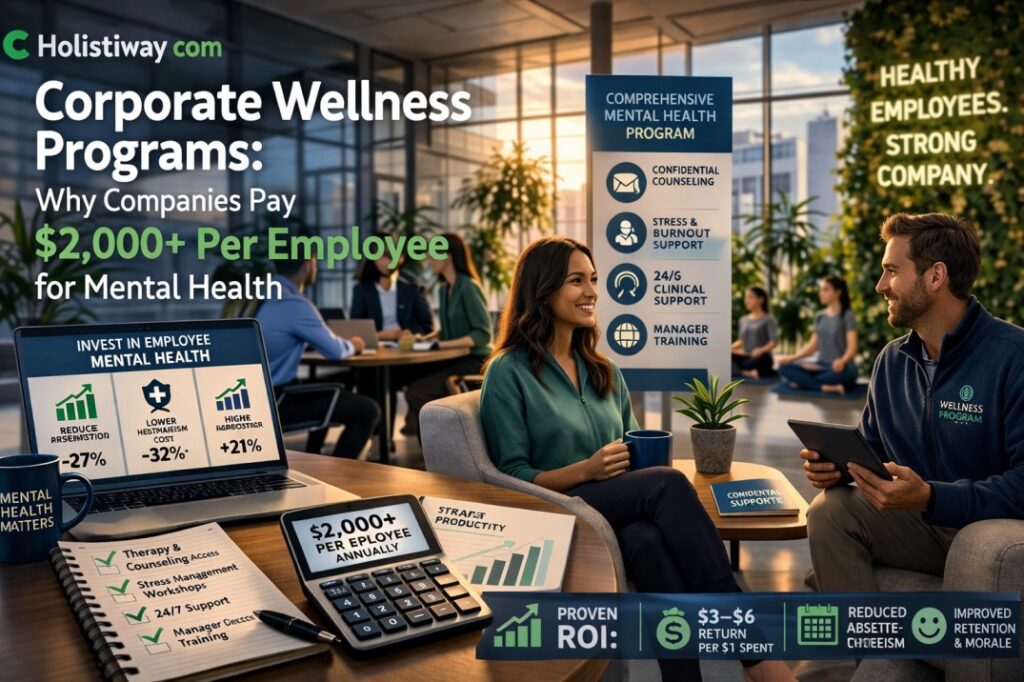

Walk into any corporate budget meeting this quarter and you’ll notice something curious. While finance teams scrutinize travel expenses and office supplies, one line item keeps expanding: employee mental health. Forward-thinking companies now allocate $2,000 to $5,000 per worker annually for psychological wellbeing initiatives. This isn’t corporate charity—it’s cold, calculated business strategy that happens to transform lives.
The real question isn’t whether organizations can afford these investments. It’s whether they can survive without them.
The Quiet Crisis Draining Corporate Balance Sheets
Today’s workplace has evolved into a pressure cooker of psychological demands. Recent data reveals 39% of employees now report burnout symptoms, climbing from 35% just two years ago
. Even more telling, over half of all workers have faced mental health challenges impacting their job performance, yet merely one-third feel safe disclosing these struggles to employers
.
These statistics translate into brutal financial realities. Burnout alone costs employers between $5,500 and $28,500 per employee annually when accounting for diminished output, sick days, and eventual replacement
. For a company employing 500 people, that’s potentially $14.25 million in yearly losses—enough to sink quarterly earnings.
The mathematics worsen when examining untreated conditions. Depression and anxiety disorders drain approximately $1 trillion from global productivity yearly
. American businesses specifically lose $193.2 billion annually through absenteeism, presenteeism (working while psychologically impaired), and staff turnover.
What makes this epidemic particularly insidious? Three-quarters of employees display at least one mental health symptom, yet less than half receive treatment
. Stigma combined with inadequate care access creates invisible workforce deterioration that standard metrics miss entirely.
Decoding the $2,000 Investment Threshold
That $2,000-per-employee figure isn’t arbitrary—it’s the calculated cost of genuine support. This budget typically encompasses:
Professional therapeutic access spanning six to twelve annual sessions through telehealth or traditional providers. Digital mental health infrastructure including evidence-based applications, meditation platforms, and cognitive behavioral therapy tools. Crisis intervention systems featuring round-the-clock hotlines and emergency psychiatric partnerships. Leadership competency development training managers to recognize distress indicators and facilitate supportive conversations. Preventive programming covering stress management workshops, resilience training, and financial wellness coaching.
Industry pioneers demonstrate what’s achievable with deeper commitment. Johnson & Johnson’s comprehensive wellness initiative saved approximately $250 million in healthcare costs across a decade, generating $2.71 for every dollar invested
. Their smoking rates dropped two-thirds, while high blood pressure and physical inactivity fell over 50% among participants.
The $2,000 baseline emerged from post-pandemic workforce evolution. After COVID-19 dissolved boundaries between professional and personal life, employees fundamentally reassessed work relationships. The Great Resignation wasn’t merely about compensation—it represented mass rejection of environments demanding psychological sacrifice without adequate support systems.
The ROI That Converts Skeptics into Believers
Financial officers initially resist adding $2,000 per head to substantial benefits costs. Then they examine return calculations.
Research consistently demonstrates every dollar invested in mental health initiatives yields $4 to $6 in returns
. Deloitte’s comprehensive 2024 study of 26 research papers found employers receive £4.70 for every £1 invested in workplace wellbeing programs—a staggering 470% ROI
. Some analyses suggest even higher returns: up to $6 in healthcare savings per dollar invested
.
These returns materialize through multiple channels:
Absenteeism plummets when employees access mental health support. Workers with adequate resources take 56% fewer sick days
, generating approximately $2.73 in reduced absence costs per dollar invested
. One comprehensive study documented 25-30% absenteeism drops following wellness program implementation
.
Presenteeism reverses—perhaps more costly than absence. Presenteeism costs UK businesses £24-28 billion annually . Wellbeing programs targeting this issue deliver immediate productivity gains exceeding healthcare savings.
Talent retention strengthens dramatically. Replacing an employee costs 50-200% of their annual salary. When mental health benefits improve retention by modest percentages, savings eclipse program costs. Companies with robust wellness programs report 9% voluntary turnover versus 15% at organizations with inadequate offerings . Employees satisfied with benefits are five times more likely remaining with their employer .
Healthcare costs contained through early intervention. Medical costs fall approximately $3.27 for every wellness dollar spent
. Organizations with comprehensive programs experience 25% lower healthcare expenditures compared to those lacking such investments
. Johnson & Johnson saved $225 per employee annually in healthcare costs alone
.
Productivity amplifies significantly. Wellness program participants demonstrate up to 12% higher productivity
. At Aetna, participants gained 62 minutes of productive time weekly
. When trust and clear goals accompany wellness support, work performance jumps 25%
.
Beyond Spreadsheet Logic: The Strategic Evolution
While ROI calculations persuade financial officers, substantial mental health investment represents something profound: fundamental reimagining of human capital value. Organizations increasingly recognize employees aren’t interchangeable resources to be extracted and discarded, but complex assets requiring cultivation and care.
This perspective aligns with economic evolution. The knowledge economy rewards creativity, collaboration, and cognitive performance—capabilities deteriorating under chronic stress and psychological distress. Companies investing heavily in mental health aren’t being generous; they’re optimizing competitive advantage.
The investment also functions as cultural differentiation. In an era where employer branding significantly influences recruitment, reputation for genuine employee care attracts superior talent. It creates protective moats against competitors offering higher salaries but inferior support.
For younger generations particularly, mental health benefits outweigh traditional perks. Millennials and Gen Z workers, now constituting the workforce majority, rank psychological support above retirement matching or gym memberships when evaluating employers
. Organizations failing these expectations simply cannot win talent wars.
What $2,000 Actually Purchases
Understanding this investment level requires examining comprehensive support components:
Evidence-based therapeutic access constitutes significant budget portions. Quality psychological care isn’t inexpensive—whether through traditional providers or telehealth platforms offering unlimited or specialized care for trauma, addiction, or eating disorders.
Digital mental health infrastructure demands substantial enterprise licensing across large workforces. Modern wellness relies heavily on technology—meditation applications, AI-powered mood tracking, and virtual therapy platforms providing on-demand support traditional benefits cannot match.
Manager mental health literacy proves crucial since frontline leaders determine daily employee experiences. Training them to recognize warning signs, navigate supportive conversations, and accommodate psychological needs requires substantial educational investment. Yet merely 67% of managers currently feel equipped helping employees with mental health challenges
.
Crisis safety nets including immediate intervention capabilities, 24/7 crisis lines, and psychiatric emergency partnerships. Building this infrastructure isn’t cheap, but essential for authentic duty of care.
Preventive and proactive programming beyond treatment—resilience training, stress inoculation workshops, financial wellness coaching (since money anxiety drives psychological distress), and boundary-setting education.
Navigating Criticisms and Complications
Despite compelling justifications, substantial wellness investment generates legitimate controversy. Critics argue corporations essentially privatize mental healthcare that should be public responsibility. They suggest employers use therapy applications and meditation subscriptions as “band-aids” covering systemic issues—unsustainable workloads, poor management practices, toxic cultures.
These concerns hold merit. A company demanding 60-hour weeks while providing mindfulness applications engages in “wellness theater,” not genuine care. The $2,000 investment only delivers ROI when paired with cultural changes respecting boundaries and prioritizing sustainable performance.
Additionally, utilization rates vary significantly. Some employees never access available resources, raising questions about universal investment wisdom. However, advocates counter that creating cultures where help is available changes workplace dynamics even for non-users, reducing stigma and encouraging peer support.
Privacy concerns also emerge. Employees worry that utilizing mental health benefits creates career risks or enables data monitoring. Successful programs require strict confidentiality guarantees and complete separation from performance management systems.
The Trajectory: From $2,000 Toward Holistic Integration
Current benchmarks likely represent waypoints rather than destinations. Forward-thinking organizations move toward even more comprehensive models integrating mental health into every work design aspect:
- Mental health days distinct from traditional sick leave
- Sabbaticals and extended leave options for psychological recovery
- Workspace design optimized for psychological safety and stress reduction
- AI-powered early warning systems identifying burnout risk before crisis
- Peer support networks and mental health ambassador programs
- Integration with diversity efforts recognizing marginalized groups face unique psychological challenges
Some organizations experiment with unlimited mental health budgets or personalized wellness stipends employees allocate according to individual needs. The trend moves toward flexibility and personalization rather than one-size-fits-all programming.
The Bottom Line
Companies paying $2,000+ per employee for mental health aren’t being extravagant—they’re being ruthlessly rational. They’ve recognized that in a knowledge economy, psychological wellbeing is prerequisite for performance. The alternative is accepting massive productivity losses, crippling turnover, and competitive disadvantage.
This investment represents fundamental shift in how businesses value human capital. Employees are no longer viewed as expendable resources to be extracted and replaced, but as complex individuals whose psychological health directly determines organizational success. The $2,000 price tag reflects true costs of supporting whole humans in demanding professional environments.
For employees, this evolution offers unprecedented access to resources previous generations lacked. For employers, it’s strategic necessity in a labor market where talent possesses options and expectations. The workplace mental health revolution isn’t charity—it’s calculated economics that happens to align with human flourishing.
As this trend continues, thriving organizations will treat mental health investment not as a line item to minimize, but as core infrastructure essential to success. The $2,000 era is merely the beginning of workplace transformation recognizing an ancient truth: healthy minds build successful enterprises.